
Reviewed · SYDNEY FOOD TOURS
Sydney: City Highlights Walking Food Tour with Harbor Cruise
Three hours, and you get the big picture. This Sydney tour is built for instant orientation, with a 30-minute harbor cruise and Hay Street Market food stops that turn landmarks into something you can taste and remember. You also get guided context for how Sydney grew from its early days into a world-class city.
I like that the guide stories stay practical, not academic, and small-group size keeps it friendly. In one recent group, Helen and Guy stood out for being both accommodating and easy to ask questions of, which matters when you are trying to plan your next move after the tour. Small group pacing also means you spend more time seeing and eating, and less time waiting.
One possible drawback: it is an active route with walking and public-transport connections, so it is not suitable for wheelchair users or people with mobility impairments.
In This Review
- Key things to look forward to
- Meet at Circular Quay, then start with the city’s map in your head
- Riding the underground rail, and why it changes how you see the city
- Central Station to Chinatown by light rail, old versus new in motion
- Hay Street Market refreshment, then Chinatown hawker-style eating
- Pyrmont connections, and getting ready for the harbor views
- The 30-minute harbor cruise, where Sydney landmarks become a story
- Price and value for a $48, 3-hour city orientation
- Who this tour suits best, and who should skip it
- Should you book this Sydney walk-and-cruise tour?
- FAQ
- How long is the Sydney City Highlights Walking Food Tour with Harbor Cruise?
- Where do I meet the guide?
- What is included in the tour?
- Do I need an Opal card?
- How big is the group?
- Is this tour suitable for everyone?
Key things to look forward to

- 30-minute harbor cruise with full commentary that connects the skyline to the city’s story
- Hay Street Market refreshment and Chinatown hawker-style eating for real local flavor
- Underground rail time using Australia’s oldest railway network
- Chinatown and the light rail route that shows old versus new Sydney
- Cap of 10 people so you get a personal feel and not a crowded squeeze
- Finishes at Circular Quay with lots of waterfront options right after
Meet at Circular Quay, then start with the city’s map in your head
You kick things off at the Pullman Quay Grand Sydney Harbour area, with the practical meet-up at Quay Grand Hotel, Circular Quay on Macquarie Street at 1:50pm. That timing is smart, because you start while the afternoon still has plenty of daylight for photos and it leaves you with a smooth lead-in to the harbor cruise later.
The early focus is on orientation, which is exactly what you want in Sydney. Circular Quay is where multiple storylines overlap, and your guide uses that spot to give you a mental framework for what you are about to see. Expect a short safety briefing and then a guided walk through key viewpoints so you are not just staring at photos later with no context.
What I like about starting here is that the tour naturally points you toward the best places to return to after. You will finish at Circular Quay, but you will also know how places like The Rocks and Circular Quay connect to the rest of the waterfront route. If you like “first-day clarity” so you can roam freely on your own after, this structure really helps.
Bring the basics your guide expects: comfortable shoes, water, and a hat, since the walking portions are outdoors.
Riding the underground rail, and why it changes how you see the city
A big part of the tour’s appeal is the underground travel segment. You spend about 10 minutes on the oldest railway network in Australia, and that shift below ground does something subtle but useful.
It breaks the usual sightseeing pattern. Instead of only moving along the surface, you experience how Sydney layers itself. When you come back up into the light rail and street scenes, it feels like the city has multiple “levels” of time, not just one flat strip of attractions.
This portion also sets up the old versus new theme the guide keeps returning to. Sydney’s identity is partly about reinvention, but it is also about continuity. The train ride is your reminder that modern city life still runs on older infrastructure, and your guide ties that into how the city evolved since 1788.
If you hate rigid schedules, this is a good middle ground. The ride is short, but it is meaningful. You are not stuck underground for long, and you are not just sitting through transportation. It’s transport with context.
More Sydney counters and markets in a row:
- Chef-Led Hunter Valley Gourmet Food and Wine Day Tour from Sydney★ 5.0 · 728 reviews
- Luxury Hunter Valley Wildlife & Wine Tasting Tour from Sydney★ 5.0 · 652 reviews
- Sydney Food Tour with 8 Authentic Tastings by Secret Food Tours★ 5.0 · 267 reviews
Central Station to Chinatown by light rail, old versus new in motion
After the underground segment, you keep rolling through the city core and toward Chinatown. You get guided walking time, plus a quick light rail connection. This is one of those routes that feels effortless once you are actually doing it, because Sydney’s rail and tram grid makes cross-neighborhood hopping simple.
Central Station is the “anchor” here. Even if you do not plan to tour it deeply on your own, passing through with a guide gives you orientation you can use later when you are trying to connect directions. From there, the route helps you compare old versus new Sydney in real time, with the transit rhythm doing the connecting work for you.
A key moment on this stretch is the migrant wall. Your guide uses it as a prompt to talk about the wave of people who chose Australia as home over the past 50 to 80 years. That does not turn into a lecture. It becomes a way to read the neighborhood you are about to eat in, because Chinatown and the surrounding areas are shaped by generations of arrivals.
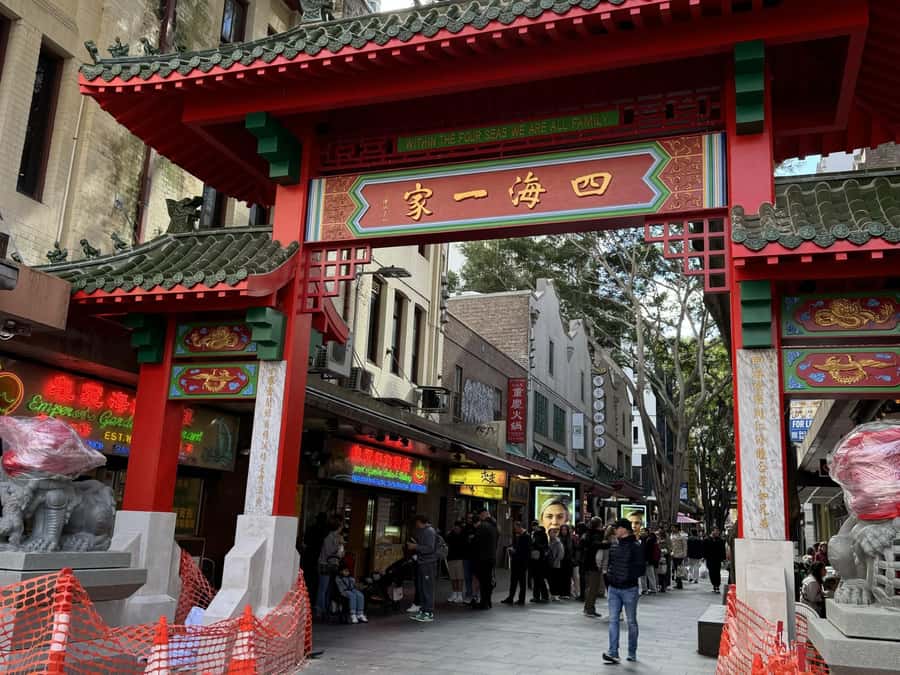
Then you arrive at Chinatown for guided time. Expect walking and stops that connect what you see on the street with how the city changed. If you like learning through noticing, this is a tour style that fits.
Practical tip: Chinatown is easier when you have a strategy. Keep your camera ready, but also keep your energy for food. This is not a “quick look and rush out” stop.
Hay Street Market refreshment, then Chinatown hawker-style eating
Food is the heart of this tour, and the best way to think about it is that it gives you a starter kit. You do not just get one meal at one place and call it a day. You get a refreshment stop at Hay Street Market first, then you transition into Chinatown with time to taste more.
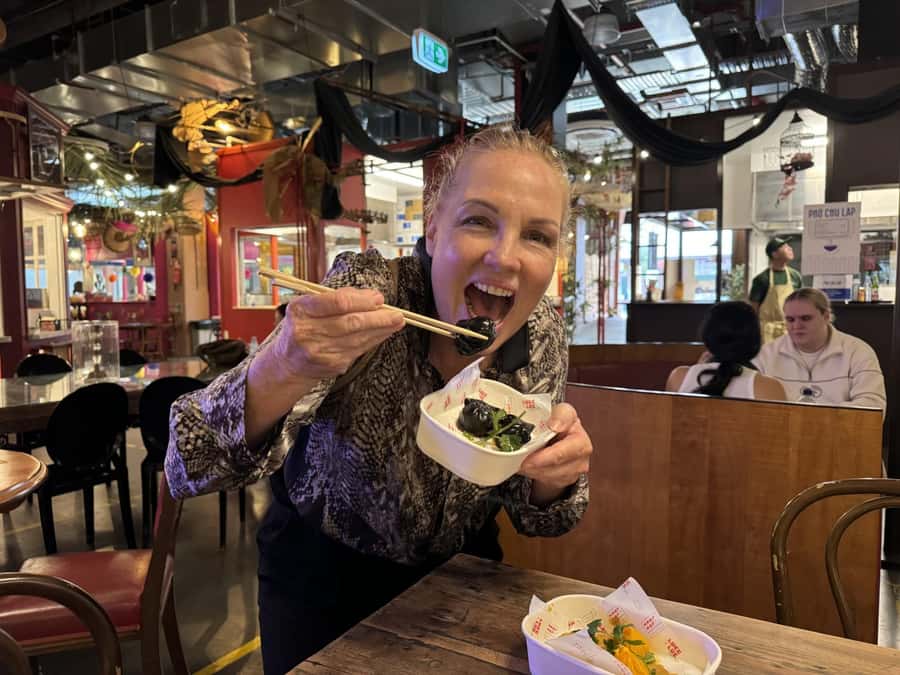
Hay Street Market is where the tour gives you a break and a chance to try things without having to figure it all out solo. Your guide helps by keeping the group moving at a pace that still feels relaxed, so the market visit works as a true reset, not a rushed stop. You get refreshment included, which makes a noticeable difference at the $48 price point.
From there, Chinatown becomes the “taste and wander” part. You get guided time in Chinatown, then about 45 minutes of free time built in for shopping and local snacks at the food market. This free time matters more than you might think, because it lets you try what looks best right now, not what sounds best in someone else’s plan.
One caution: hawker-style dining can mean lots of small bites and shared-feeling energy. If you are the type who gets overwhelmed in crowded, busy food areas, plan to move slowly during your free time. You do not have to sample everything. Pick a few things, take photos as you go, and keep water close.
This food block is where the tour earns its value. Sydney has plenty of self-guided food wandering, but with a guide you also get a sense of how neighborhoods evolved, which makes your tastings feel tied to place instead of random eating.
Pyrmont connections, and getting ready for the harbor views
After Chinatown, you head via light rail and reach Pyrmont for more guided walking time. Pyrmont is a useful “between” neighborhood on this route, because it tees you up for the harbor experience rather than dropping you straight into it.
This stretch is about transition. The guide keeps describing what you will see from the water so the ferry ride later feels like a continuation, not a separate activity. You also pick up additional street-level context that makes waterfront landmarks easier to recognize when the view widens.
You get another tram connection and then you shift to the harbor. At this point, you should be ready for a slower pace. If you wear shoes that are comfortable for standing and walking, you will feel much better during the next step, since it is the most view-heavy part of the tour.
Photo tip: If you want the skyline photos to look their best, keep your camera accessible. The water lighting changes as the ferry ride progresses, and your guide points out key spots while you are still moving.
More of the big Sydney sights in one go:
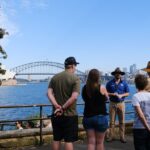
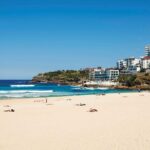


The 30-minute harbor cruise, where Sydney landmarks become a story
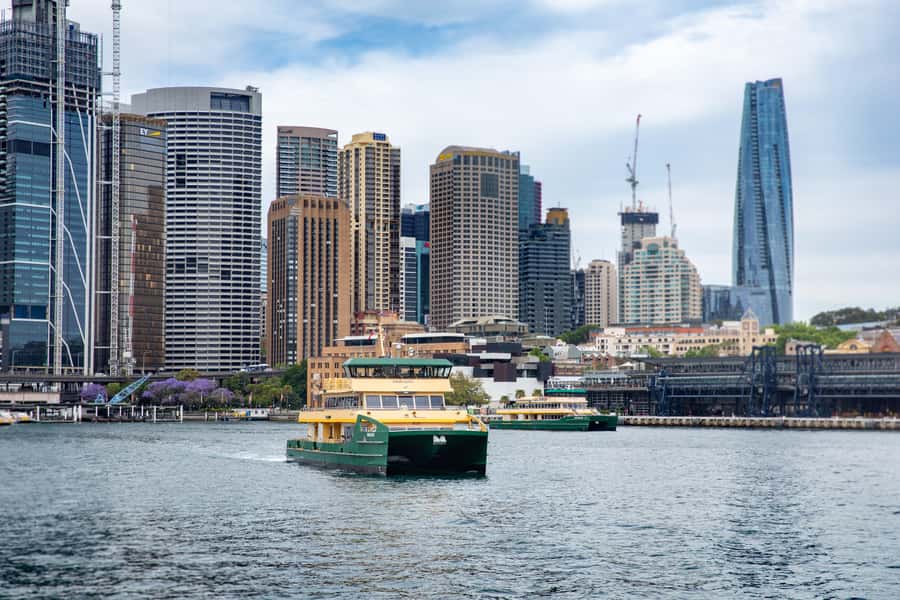
The harbor cruise is the big visual payoff, and it is timed well. You spend about 30 minutes on the ferry with scenic views and full commentary. This is the section that makes the tour feel like more than a food walk.
Your cruise route passes major waterfront icons, including Darling Harbour, Barangaroo, East Balmain, Milsons Point, Luna Park, Harbour Bridge, Opera House, The Rocks, and Circular Quay. That list reads like a postcard set, but the guide’s commentary is what helps you connect the dots between them.
Instead of just seeing landmarks, you are hearing how Sydney shaped itself and how it became world-class. The story reaches beyond architecture into migration and development patterns, so the harbor stops feel tied to real people, not just buildings.
There is also a built-in photo moment. You get a stunning city skyline opportunity from the water, and your guide keeps talking as the boat moves so you are not stuck in silence waiting for the next landmark. It helps a lot if you are traveling solo or on a tight schedule, because you get the best of “scenic” and “explanations” in one package.
By the end, you return to Circular Quay, which is perfect because you are not left stranded far away from dinner plans. You can continue into waterfront restaurants and pubs in the Rocks precinct area right after.
Price and value for a $48, 3-hour city orientation
At $48 per person for a 3-hour small-group experience, the value is strongest if you want both food and a proper sightseeing “anchor.” You are not paying just for a walking route, and you are not paying just for a view cruise either. You get a blended plan that covers orientation, food, and waterfront scenery.
What you are getting for that price:
- A passionate local guide in English
- Refreshment included at Hay Street Market and in the Chinatown food area
- A scenic 30-minute harbor cruise with commentary
- Transit connections as part of the route, but you do need an Opal card for transport
The one extra cost you should plan for is the Opal card requirement. The tour data notes you need Opal for transport, and credit or debit card is required to access it. That is not a problem, it just means your total trip cost depends on how you tap in and out.
The small-group cap of 10 people is part of why the price feels fair. When you are in a bigger group, food time gets chopped up and people drift. Here, the guide can keep the group together, give context, and still leave you breathing room during Chinatown.
In short: if you are the kind of traveler who likes to get your bearings fast and then explore on your own later, this tour is a solid use of half a day.
Who this tour suits best, and who should skip it
This experience fits best if you want:
- A guided first-timer orientation to how Sydney works
- Food time that includes Hay Street Market and Chinatown snack options
- Classic harbor photos plus commentary that explains what you are seeing
- A small group pace so you can ask questions
It is also a good match if you like history context without sitting in a museum. The guide connects the city’s evolution since 1788 to what you see in neighborhoods and along the waterfront.
Where it is not a good fit is spelled out clearly. It is not suitable for people with mobility impairments, wheelchair users, visually impaired people, people with heart problems, and babies under 1 year. It also includes outdoor walking and underground and transit segments, so comfort and stamina matter.
If you have trouble walking for extended periods, or you know you will be uncomfortable in crowds around markets, you might consider a different style of tour with fewer steps.
Should you book this Sydney walk-and-cruise tour?
I think you should book it if you want a tightly packed afternoon that covers the best of Sydney in one go: street-level orientation, food you can actually eat, and a harbor cruise with skyline payoff. The $48 price feels reasonable because the tour is not pretending to be only “transport plus photos.” It gives you food stops, a guide who narrates the city’s evolution, and a cruise route that hits the big-name waterfront landmarks.
Skip it if you do not handle walking and transit well, or if you fall into the clearly listed unsuitability categories. And if you hate food markets and free-time wandering, you may find the Chinatown snack portion less enjoyable than you want.
If you can walk comfortably, bring sun protection, and want an easy way to understand Sydney quickly, this is the kind of tour that sets you up for a better remainder of your trip. You finish right where you want to keep going, Circular Quay and the nearby Rocks precinct.
FAQ
How long is the Sydney City Highlights Walking Food Tour with Harbor Cruise?
The tour lasts 3 hours.
Where do I meet the guide?
Meet at Quay Grand Hotel, Circular Quay on Macquarie Street at 1:50pm.
What is included in the tour?
You get a passionate local guide, refreshments at Hay Street Market, and refreshments at China Town.
Do I need an Opal card?
Yes. The tour requires an Opal card for transport, and the information notes credit or debit card is required.
How big is the group?
It is limited to 10 participants.
Is this tour suitable for everyone?
No. It is not suitable for people with mobility impairments, wheelchair users, visually impaired people, people with heart problems, or babies under 1 year.
Hulls Leaving Circular Quay
- Sydney: Big Bus Hop-On Hop-Off Tour with Optional Cruise
★ 4.4 · 2,697 reviews - Sydney: Whale Watching Adventure Cruise
★ 4.2 · 1,790 reviews - Blue Mountains Day Tour Including Parramatta River Cruise
★ 4.5 · 1,585 reviews - Sydney: Morning or Afternoon Harbour Sightseeing Cruise
★ 4.7 · 1,520 reviews
Guided Walks Around the City
- Sydney Opera House Official Guided Walking Tour
★ 4.5 · 3,770 reviews - From Sydney: Blue Mountains Tour with Waterfall Walk & Lunch
★ 4.8 · 2,400 reviews - Sydney The Rocks Guided Walking Tour
★ 5.0 · 1,546 reviews - Sydney: The Rocks 90-Minute History Walking Tour
★ 4.7 · 1,092 reviews
Latest Sydney additions
- Sydney: Surry Hills Private Food Tour with +8 Local Tastings
★ 5.0 · 1 review - Sydney: Hunter Valley Wine Tour – Choc, Dumplings & Oysters
★ 5.0 · 1 review - Private Transfer FROM Sydney Downtown to Sydney Airport 1-2 pax
★ 5.0 · 1 review - Sydney Harbour Melbourne Cup Cruise
★ 5.0 · 1 review - Sydney: Brewery, Winery, and Distillery Tasting Tour
★ 5.0 · 1 review - Sydney: Watsons Bay Walking Tour
★ 5.0 · 1 review - Sydney: City Hike with Opera Bar Lunch
★ 5.0 · 1 review - Overnight Harbour Cruise Experience
★ 4.0 · 1 review
Sydney Food Tours, compared.

Chef-Led Hunter Valley Gourmet Food and Wine Day Tour from Sydney
Read our review →
Luxury Hunter Valley Wildlife & Wine Tasting Tour from Sydney
Read our review →
Sydney Food Tour with 8 Authentic Tastings by Secret Food Tours
Read our review →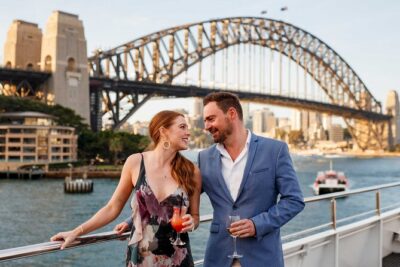
Sydney Gourmet Gold Penfolds Dinner Cruise from Darling Harbour
Read our review →
Food Tour in Surry Hills with 8 Local Food Tastings
Read our review →
Sydney Private Food Walking Tour With Locals: The 10 Tastings
Read our review →
Ultimate Aussie Food Tour (Semi Private Tour – Max 6 Guests)
Read our review →More of this kind of Sydney day