
Reviewed · SYDNEY ATTRACTION TICKETS
Titanic The Human Story in Sydney
Titanic’s story hits close to home. This Sydney exhibition turns the legend into an emotional, audio-led walk through personal artifacts and life-size ship interiors. You follow the human side of the disaster, not just the ship.
I especially like how the exhibit uses real personal items like photographs, handwritten letters, and keepsakes to make passengers and crew feel specific, not generic. I also like the survivor testimony audio, which helps you experience the recreated first-class and third-class spaces as part of one unfolding narrative.
One thing to think about: it moves for about 1 hour 20 minutes to 1 hour 30 minutes, so if you’re someone who needs lots of time to stand and read slowly, you may want to plan for a steady pace. Also, late arrivals may have to wait or be denied entry if space is limited.
In This Review
- Quick hits before you go
- Pier 2 Bar start, and the audio setup that keeps you moving
- Walking the ship interiors: the first-class and third-class contrast
- The artifacts: letters, photographs, and keepsakes that make history specific
- Survivor testimony audio: how the sound changes the story
- Practical pacing: how long it takes and how to enjoy the visit more
- Photos, rules, and what to bring so it stays stress-free
- Ticket price and value: what $31.43 gets you
- Who should book Titanic: The Human Story in Sydney
- Should you book it? My straight answer
- FAQ
- How long is Titanic The Human Story in Sydney?
- Is the audio guide included, and what language is it in?
- Do I need headphones?
- Where does the experience start?
- Can I take photos during the exhibition?
- What is included with the ticket price?
- Can I change or get a refund after booking?
- Are there age rules for children?
Quick hits before you go

- Pier 2 Bar is your launch point, and the experience is designed to flow from there through the story spaces.
- Handheld audio support is part of the experience, and you can also download the guide to your smartphone.
- First-class vs third-class contrast is shown through natural-size recreations, not just captions.
- Letters and keepsakes do the emotional work, linking hope, fear, and fate to real objects.
- Photo rules are clear, so you can capture moments without disrupting others.
Pier 2 Bar start, and the audio setup that keeps you moving
You start at Pier 2 Bar, and right away the experience signals what kind of visit this is. Instead of a room-by-room museum shuffle, you’re walking through a story that uses audio to pace you.
The audio guide is built into the ticket, and it’s available in English. Practically, you have two ways to use it: you can use the audio guide system on site, and you can also download the audio to your smartphone. Either way, bring your own smartphone and headphones if you want the easiest, most comfortable setup. Headphones matter here because the exhibit is designed to help you focus, and the testimonies are the point.
Also note the way entry can work. The experience feels self-guided in how it runs once you’re inside, and it may be worth arriving early. If you get there before your time slot, you might still be allowed in rather than being stuck waiting outside. That can be a big quality-of-life win in Sydney, where timed attractions can sometimes feel rigid.
Walking the ship interiors: the first-class and third-class contrast
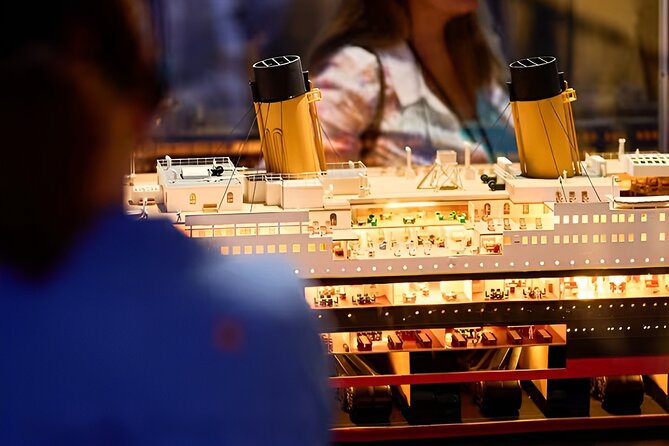
The heart of the experience is the walk through recreated interiors of the Titanic, done at natural scale. The idea is simple, but it hits hard: you see how drastically different living conditions were between classes, and you feel that contrast through space.
On one side, you get the luxury of a first-class suite. On the other, you see the simplicity of a third-class cabin. It’s not just a comparison of furniture. It’s a comparison of how people were likely treated, how they were likely housed, and what their options might have looked like when the unthinkable happened.
What makes this format valuable is that it gives your brain something physical to anchor to. A history talk can stay abstract. Here, you’re moving through rooms while your audio guides you through the human angle of what you’re seeing. The result is that the Titanic story stops being a single famous moment and becomes a series of lived moments.
There’s also a strong cause-and-effect feel. The exhibit’s narrative style nudges you to connect the artifacts you’re seeing with the audio testimonies you’re hearing. That makes the contrast between first-class and third-class feel like part of one story, not separate displays.
Other Sydney attractions worth pre-booking:
- SEA LIFE Sydney Aquarium Entry Ticket★ 4.3 · 1,025 reviews
- SEA LIFE Sydney Aquarium Entrance Ticket★ 3.5 · 551 reviews
- Sydney 3, 5, or 7 Ticket Flexi Pass★ 4.5 · 430 reviews
The artifacts: letters, photographs, and keepsakes that make history specific
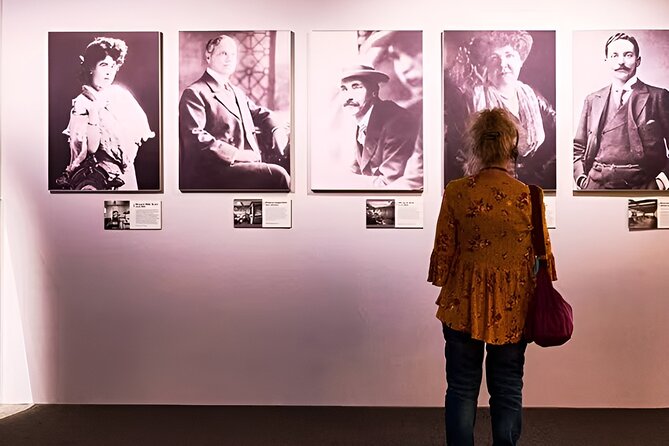
Titanic is one of those events everyone thinks they know. The power of this exhibition is that it resists the easy shorthand. You step back into 1912 through photographs, handwritten letters, personal belongings, and keepsakes that belonged to people on board.
What I like about this approach is that it changes the emotional temperature. Objects don’t argue or lecture. They just sit there, real and fragile-feeling, and you read or listen your way into the person they came from. Letters are especially effective here because they carry voice. Photographs and keepsakes add context, helping you imagine what daily life meant before the ship’s final journey.
You’re also shown how reality can feel stranger than fiction. The exhibition frames the Titanic story as something people experienced firsthand, not something that only lives in textbooks. Even if you think you already know the broad outline, personal items tend to reveal side stories and details you may never have encountered.
This is where a lot of the emotional weight comes from. The recreated spaces give you the stage. The artifacts give you the characters.
Survivor testimony audio: how the sound changes the story
Audio isn’t just extra information in this exhibit. It’s part of the storytelling engine. As you walk through the recreated interiors, you hear testimonies from survivors.
That matters because it changes how you read the rooms. Without the audio, the spaces might feel like set dressing. With the audio, they become places where people had conversations, routines, and decisions. You’re not only learning what happened. You’re hearing it through voices that shaped what you’re watching.
The testimonials also help you slow down at the right moments. Even if you walk fairly quickly, the audio cues you to pay attention to the human details tied to what you’re seeing.
For best results, use comfortable headphones and keep your phone charged. If you’re relying on downloaded audio, make sure your smartphone has enough battery before you start. And if the exhibit provides its own handheld audio system, use it right away so you’re not fiddling once you’re already in the flow.
Practical pacing: how long it takes and how to enjoy the visit more
The experience runs about 1 hour 20 minutes to 1 hour 30 minutes. That time range is short enough to fit into a busy day in Sydney, but long enough to feel substantial.
Here’s the practical way to plan your pace:
- If you want the best emotional impact, don’t try to sprint. Give yourself time to pause with the letters and photographs.
- If you’re visiting with kids or you have limited patience for reading, focus on the audio testimony moments and use the artifacts as visual support.
- If you’re arriving late, assume you may have to wait or even be denied entry if space is limited. Better plan a buffer.
One small but meaningful tip: because the visit is designed to be chronological and audio-led, you get more out of it if you don’t constantly step out to check your phone. The story is meant to stay in motion.
Another way to fill the same day out of Sydney:


Photos, rules, and what to bring so it stays stress-free
You can take photos, but you should avoid disturbing other visitors. The experience also has firm rules on equipment and behavior, which helps keep the room atmosphere intact.
The main things to remember:
- No selfie sticks or tripods for professional-style setups.
- Weapons, smoking, vaping, drugs, and outside food or drinks are prohibited.
- No pets, except service animals.
Bring your own smartphone and headphones if you want a smoother audio experience. If you’re sensitive to sound, consider bringing over-ear headphones or even noise-reducing ones if allowed in your comfort style. Also, check that your ticket is ready on your mobile device since the experience uses mobile tickets.
Even though this is an emotional exhibition, it’s still a practical one to visit. The rules help avoid chaos, so plan to follow them and you’ll likely have a calmer visit than you expect.
Ticket price and value: what $31.43 gets you
At $31.43 per person, this is priced like an attraction that wants you to spend your time, not just look at objects. The value is strongest if you like story-driven exhibitions.
What’s included is entry to the experience, plus audio guidance as part of your ticket. That audio component is key. It’s not just background narration. It’s the testimony layer that turns the artifacts and rooms into a lived sequence.
There’s also a note about Premium ticket holders: a tote bag and postcard may be included for those ticket types. If you’re picking between standard and Premium, that’s the kind of perk that can make sense for souvenir collectors, but the main value still comes from the exhibition itself and the audio-led format.
If you’re the type of traveler who likes:
- exhibitions that connect artifacts to human stories,
- clear time-friendly sightseeing,
- and audio that guides you through the space,
then the price-to-experience ratio feels fair.
If you’re more into wide-open, self-curated museum wandering, the audio-led pacing might feel a little more structured than you prefer. Still, the core artifacts and recreated interiors are there for you to engage with directly.
Who should book Titanic: The Human Story in Sydney
This experience fits best if you want something more personal than a quick Titanic overview. You don’t need to be a die-hard maritime history fan. What you do need is a willingness to treat letters, photographs, and testimony audio as the main event.
It’s a strong pick for:
- couples who want a shared emotional experience with a clear beginning and end,
- adults who like story-based exhibitions and audio interpretation,
- anyone who wants to see how living conditions differed by class through a physical space,
- visitors who want to understand the Titanic beyond the legend.
It may be less ideal if you:
- dislike audio-guided attractions,
- have trouble with reading displays or want lots of unstructured time,
- need very long time to linger in each section.
Kids can go too. Children under 15 must be accompanied by an adult, and children up to age 3 do not require a ticket. If you’re bringing younger kids, plan on using the audio and visuals as your guide, and keep expectations realistic for a 1 hour 20 minute to 1 hour 30 minute indoor experience.
Should you book it? My straight answer
I’d book Titanic: The Human Story in Sydney if you want the Titanic story told through people, not just facts. The combination of life-size recreated interiors, handwritten letters and keepsakes, and survivor testimony audio makes it feel less like a lecture and more like you’re walking alongside the story.
Skip it only if you strongly prefer traditional museum browsing with no audio structure, or if timed entry stress usually ruins your day. If that sounds like you, plan your visit carefully and aim to arrive with a buffer so you’re not rushing at the start.
Overall, for $31.43, you’re buying a short, focused, emotionally guided experience that connects history to human lives in a way a simple display never can.
FAQ
How long is Titanic The Human Story in Sydney?
It runs about 1 hour 20 minutes to 1 hour 30 minutes.
Is the audio guide included, and what language is it in?
Yes, the audio guide is included with your ticket and is available in English. You can also download it to your smartphone.
Do I need headphones?
It’s recommended to bring your own smartphone and headphones so you can enjoy the audio guide comfortably.
Where does the experience start?
The experience starts at Pier 2 Bar.
Can I take photos during the exhibition?
Yes, you can take photos, but avoid disturbing others. Professional cameras, selfie sticks, and tripods are not allowed.
What is included with the ticket price?
Your ticket includes entry to the experience. A tote bag and postcard are included for Premium ticket holders.
Can I change or get a refund after booking?
No. The experience is non-refundable and cannot be changed for any reason. If you cancel or ask for an amendment, the amount you paid will not be refunded.
Are there age rules for children?
Children under 15 must be accompanied by an adult. Children up to age 3 do not require a ticket.
Latest Sydney additions
- Sydney: Surry Hills Private Food Tour with +8 Local Tastings
★ 5.0 · 1 review - Sydney: Hunter Valley Wine Tour – Choc, Dumplings & Oysters
★ 5.0 · 1 review - Private Transfer FROM Sydney Downtown to Sydney Airport 1-2 pax
★ 5.0 · 1 review - Sydney Harbour Melbourne Cup Cruise
★ 5.0 · 1 review - Sydney: Brewery, Winery, and Distillery Tasting Tour
★ 5.0 · 1 review - Sydney: Watsons Bay Walking Tour
★ 5.0 · 1 review - Overnight Harbour Cruise Experience
★ 4.0 · 1 review - Sydney: City Hike with Opera Bar Lunch
★ 5.0 · 1 review
Sydney Attraction Tickets, compared.



Sydney Attractions Pass: SEA LIFE Aquarium, Sydney Tower Eye, WILD LIFE Zoo and Madame Tussauds
Read our review →


Snorkeling Tour: Discover Sydney’s impressive sea life
Read our review →
More of this kind of Sydney day