
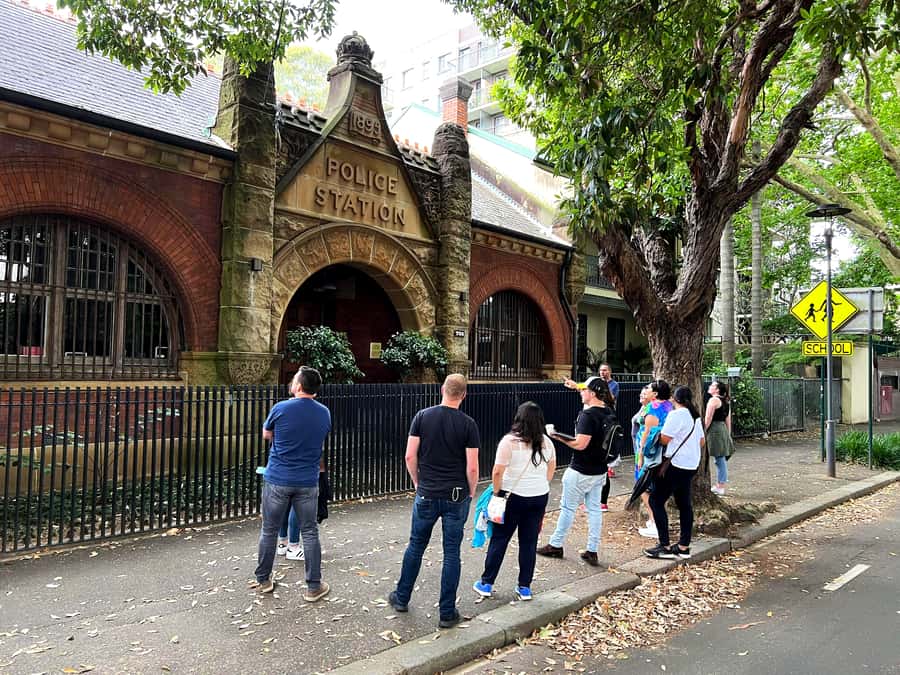
Reviewed · HISTORICAL TOURS
Sydney: Slum & Crime Scene History Tour with Colonial Pub
Crimes, ghosts, and old pubs in 2 hours. This is a guided walk through Surry Hills where you stand on sites tied to murders, cold cases, and the city’s underworld, with a historian and archaeologist doing the heavy lifting. I love the forensic-style storytelling and the way the walk makes you connect places to events. I also like how the pace stays manageable, with chances to sit during the telling.
One thing to consider before you go: there is prolonged standing at points (up to 15 minutes), so plan for comfortable, closed-toe shoes. If it rains, you will want wet-weather gear because these backstreets are still backstreets.
In This Review
- Key highlights worth knowing before you book
- Surry Hills Crime Scenes: A 2-Hour Walk With Historian and Archaeologist
- Meeting at Central Station Exit 3, Then Getting Oriented Fast
- Forgotten Colonial Burial Ground: Early Sydney’s Dark Footnote
- Crown Street Riot of 1890 and the Most Dangerous Street Walk (1900 to 1940)
- Surry Hills’ Queens of Crime: Kate Leigh and the Cocaine Queen Homes
- The 1920s Cold Case Stop: Real Evidence and a Forgotten Mystery
- WWII Connections: African-American Servicemen and the 1940s Gang War
- Crown Street Lanes, Pubs, and That “Real Place” Feeling
- Finishing at the Shakespeare Hotel (1879): A Traditional Pub Close-Out
- Price, Value, and Who This Tour Fits Best
- Should You Book This Sydney Slum and Crime Scene History Tour?
- FAQ
- What is the duration of the Sydney Slum & Crime Scene History Tour?
- Where does the tour start and where does it finish?
- How much does the tour cost?
- Is the tour appropriate for children?
- What should I bring?
- Does the tour include food or drinks?
- Is it accessible for wheelchairs?
- Is cancellation possible if my plans change?
Key highlights worth knowing before you book
- Forgotten colonial burial ground: See a piece of early Sydney you do not normally tour.
- Crown Street Riot link (1890): Walk past the old pub connected to the 200-plus thugs clash.
- Kate Leigh home stop: Visit the Surry Hills stronghold of the infamous Crime Queen.
- 1920s Cocaine Queen home stop: Spot another name that gets erased from casual Sydney stories.
- Walk a most dangerous street stretch (1900 to 1940): You will hear why Crown Street had a fear factor.
- Shakespeare Hotel finale (1879): Finish at a traditional 19th-century pub still operating today.
Surry Hills Crime Scenes: A 2-Hour Walk With Historian and Archaeologist
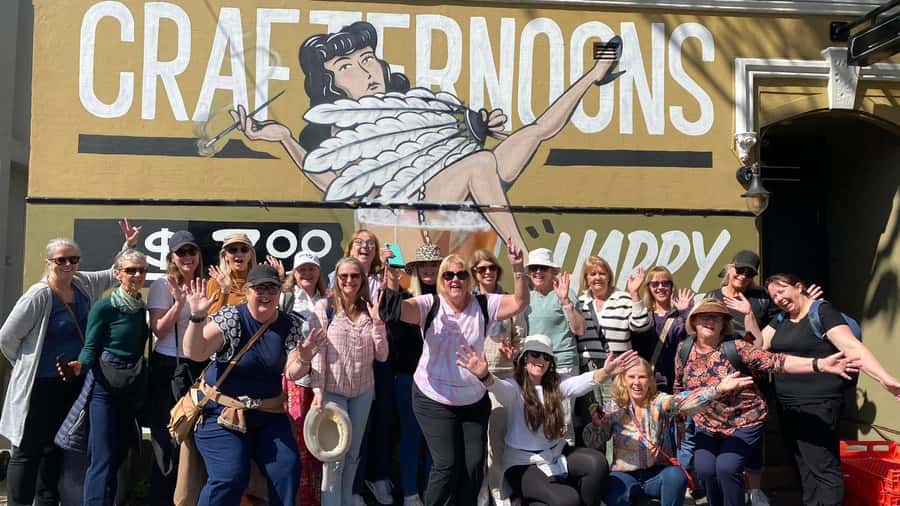
This tour is built for people who like their Sydney stories with the lights turned down. You start and end in central spots, but the middle of the walk shifts into places where vice, violence, and big-city desperation lived side by side with terrace houses and corner pubs.
The biggest reason it works is the pairing: you get a guided tour by a historian and archaeologist. That combination matters when you are hearing about older events, evidence, and how those events fit into the street grid. You are not just collecting spooky anecdotes. You are walking through a set of locations and being guided on what those locations were tied to, from the early 1800s through the early 1900s.
You will also feel the tour’s structure as it moves like a case file, not a museum tour. Expect multiple themes in sequence: burial grounds, street violence, queens of crime, and a cold case style segment. It is not a one-note experience.
Meeting at Central Station Exit 3, Then Getting Oriented Fast
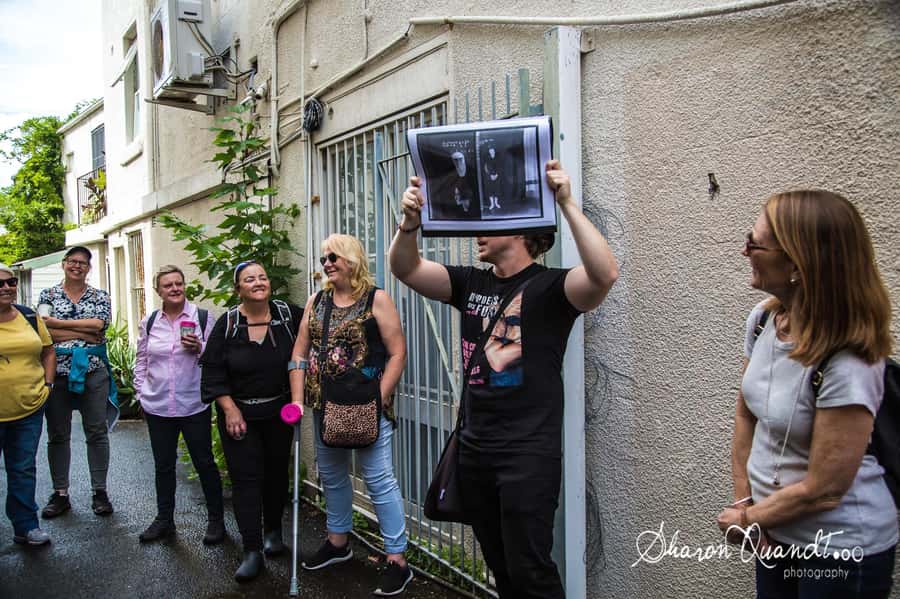
You meet at Central Station, Exit 3 on Elizabeth Street, on the eastern side of the station. The key details are clear if you look at the right corner: find the entrance with sandstone Roman columns, then head to the little square in front of it.
It helps to arrive a few minutes early because Central is busy and you want to start calm. Once you’re walking, the tour’s rhythm is simple: you get the story first, then you step into the streets where that story happened. That order is useful. It makes the street layout feel relevant instead of random.
If you like a clear wayfinding approach, you are in luck. The tour’s timing and short duration (2 hours) mean you are not wandering for long with no context. You are moving through backstreets with a purpose.
A few more Sydney options worth weighing
- The Rocks Pub Walking Tour★ 5.0 · 447 reviews
- Sydney Beer and Brewery Tour★ 5.0 · 394 reviews
- Big Night Out Pub Crawl★ 5.0 · 274 reviews
Forgotten Colonial Burial Ground: Early Sydney’s Dark Footnote
One of the stops I would not skip is the forgotten colonial burial ground. This is where the tour starts to show you a side of Sydney that most casual itineraries never reach. Burial sites are not just sad in a general way. They also tell you how a city arranged itself, who it cared about publicly, and what got left behind.
On this kind of stop, I think the value is in the contrast. You go from bright station areas into quieter lanes and then the group’s attention shifts to a place that feels like it should have stayed “important.” That is the point. The tour pushes you to notice what gets erased, literally and socially, as neighborhoods change.
It is also a good moment to set expectations for the rest of the tour. After you see how serious the past can be, the crime scenes that follow feel less like sensational trivia and more like real-world consequences built into the streets.
Crown Street Riot of 1890 and the Most Dangerous Street Walk (1900 to 1940)
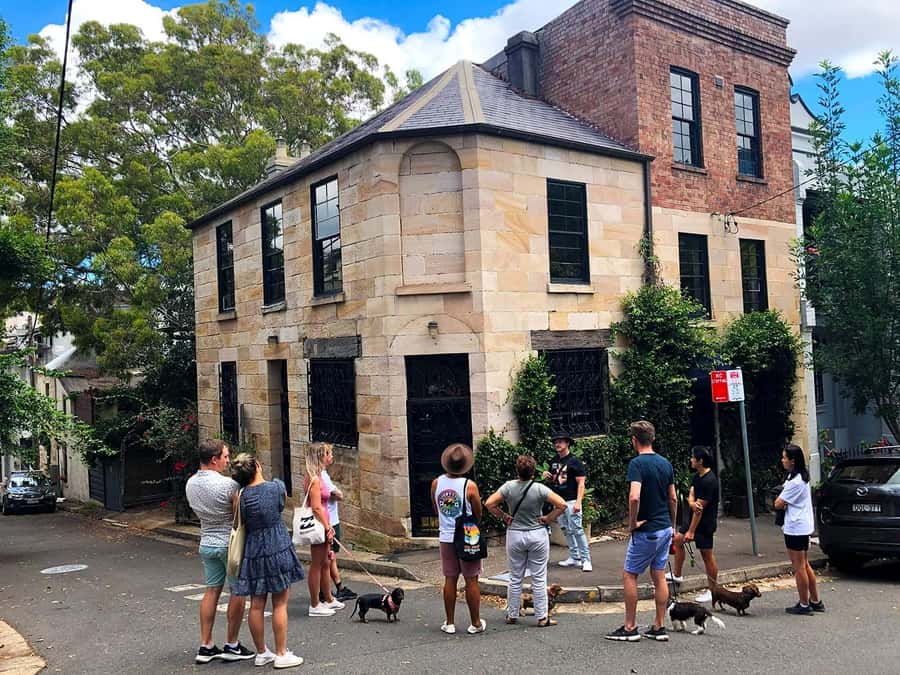
Crown Street is a headline in Sydney underworld stories, and this tour gives you more than a name. You specifically walk the most dangerous street in Australia between 1900 and 1940, which is exactly the kind of claim that sounds exaggerated until you hear the surrounding context.
You also connect Crown Street to a major flashpoint: an old pub linked to the Crown Street Riot of 1890, when more than 200 thugs smashed their way through the neighborhood. Whether you care about riots or not, that kind of event tells you how fragile “order” was at the time.
What makes this section work for me is that you are not only hearing about a riot in the abstract. You are walking the street itself, so the scale clicks in your head. You see the lanes and the building patterns that could support fast movement, hiding places, and crowds. Even if you are not a crime-history nerd, you start to understand why certain streets became battlegrounds.
One practical tip: this is also where the tour’s pace can feel most active because you are walking and listening in quick turns. Keep your water handy if the weather is warm, and keep your shoes tight on your feet.
Surry Hills’ Queens of Crime: Kate Leigh and the Cocaine Queen Homes
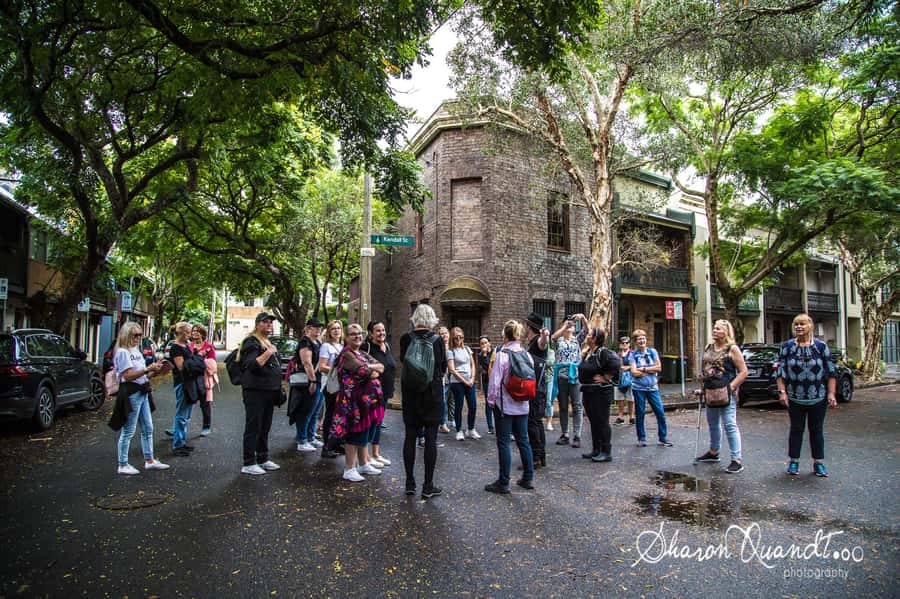
Some tours use crime figures like movie characters. This one tries to anchor them to place. The standout stops here are the homes of two women tied to Sydney’s underworld legends.
First up is the home of Kate Leigh, described here as the infamous Crime Queen. The tour frames her as a Surry Hills stronghold figure, and the visit to her home spot helps you understand why she became such a lasting name. You are not just hearing a biography. You are standing at a residential address where the story’s power comes from the contrast between ordinary streets and extraordinary criminal influence.
Then there is the home of Sydney’s forgotten 1920s Cocaine Queen. I like this stop because it flips the usual pattern. Instead of repeating the most famous criminal names, the tour points you toward a figure that should feel familiar but does not in mainstream stories. That shift is part of the value of doing this walk.
If you enjoy learning how reputations spread, this is the section that delivers. You start thinking about networks, neighbors, and how people lived alongside the underworld without always seeing it directly.
Another way to fill the same day out of Sydney:




The 1920s Cold Case Stop: Real Evidence and a Forgotten Mystery
The tour also treats one part like an investigation, not just a sightseeing circuit. You will reopen a cold case from the 1920s, examining real crime scene evidence to unravel a forgotten mystery.
Even with no lab coat required, I find evidence-based storytelling more satisfying than generic mystery chatter. It forces you to pay attention to what details mattered then, not just what sounds dramatic now. The tour’s language around evidence helps you hear the “why” behind the mystery rather than only the “what.”
This segment is also a good reminder of what you get from walking tours in older cities. Paper descriptions and old news clippings can feel distant. Seeing the streets and knowing you are in the same general area where events happened turns the case into something you can picture.
One consideration: if you get easily unsettled by crime stories, this is the point where you should check your comfort level. The tour includes murder, shootouts, vice trading, and body discovery locations in its coverage. The tone is historical, but the subject matter is heavy.
WWII Connections: African-American Servicemen and the 1940s Gang War
This tour doesn’t only jump to early crime. It carries the story into WWII and beyond, including a rarely told angle tied to African-American servicemen stationed in Surry Hills during WWII.
Then it moves into the rise of a violent 1940s gang war, tied to criminals fighting to control the lucrative vice trade catering to American troops. That section matters because it reminds you that crime history is also social history. It is about demand, power, and the movement of money through a neighborhood.
I also think this part is a smart pacing choice. After you spend time on earlier decades and crime queens, the WWII and 1940s narrative gives the story a new hinge. It also shows that underworld activity did not disappear. It shifted, followed the troops, and used the same streets in a new era.
As you walk, keep an eye on how the tour ties themes together. You start to notice how the story evolves from street rivalries into organized control over vice.
Crown Street Lanes, Pubs, and That “Real Place” Feeling
Between the bigger named stops, you will spend time on the dark alleys and twisting laneways that connect the story beats. You are basically learning a neighborhood by its shadows.
The tour description also points out a key detail that you will feel rather than just hear: before cafés and cocktail bars, Surry Hills had black market alcohol, gambling dens, brothels, dope racks, and rivalries. It also notes there were over 90 pubs, and street gangs battled for turf.
That scale matters. It means the underworld was not confined to one block. It was distributed through the neighborhood’s everyday spaces. Walking through it with a guide helps you understand how violence could grow from many small locations rather than one central showdown.
Finishing at the Shakespeare Hotel (1879): A Traditional Pub Close-Out
The tour ends at the Shakespeare Hotel on Devonshire Street. It’s established in 1879 and is described as one of the only traditional 19th-century pubs still operating in the city.
This finish is practical. You are not dumped back into an anonymous street. You close the walk at a known, old-school pub spot, which makes it easy to continue your evening at your own pace.
Also, the tour includes no drinks or food. That is actually a plus. You can choose if you want a beer or not, and you do not get stuck with a pre-set expectation. If you want to grab a drink right away, this ending spot makes that simple.
One small human detail that stands out from the experience: one guide named Elliot was praised for how passionate and nonstop the storytelling felt, and he even joined in at the end for a beer. That kind of closing moment can make the last 10 minutes feel less like a rushed exit and more like a conversation you can extend.
Price, Value, and Who This Tour Fits Best
At $38 per person for about 2 hours, this is priced like a specialty guided walk, not a basic sightseeing deal. The value comes from two things.
First, you are paying for a guided historian and archaeologist approach, plus a structured “crime scene history” format that uses real locations. That is more work than a casual narrative tour.
Second, you get a dense set of named stops in a short time: burial ground, Crown Street riot connection, Kate Leigh, Cocaine Queen home, a 1920s cold case, WWII servicemen context, and a 1940s gang war theme. In a city where many tours cover one narrow angle, this one stacks multiple eras and personalities without dragging.
It is also a good match if you like:
- crime history tied to real places
- street-level walking tours that feel like local investigation
- Sydney’s inner suburbs beyond the usual waterfront loop
A few fit considerations to keep you happy:
- This tour is not suitable for children under 13.
- Wear comfortable shoes and closed-toe shoes.
- Expect periods of prolonged standing up to 15 minutes.
- If light to moderate rain is forecast, bring wet-weather gear.
Wheelchair access is listed, so if you use a mobility device, it is worth asking how the route handles uneven sidewalks and small lanes, but the tour is specifically described as wheelchair accessible.
Should You Book This Sydney Slum and Crime Scene History Tour?
I think you should book if you want Sydney with a darker edge and you enjoy learning from a guide who treats the past like evidence, not just gossip. The combination of a burial ground stop, Crown Street era violence, and the queens of crime makes this more than a one-idea tour.
You might skip it if you hate prolonged standing, dislike crime-focused themes, or prefer upbeat city stories only. Also, if you want food included, you will need to plan to eat elsewhere since drinks and food at the pub are not part of the package.
If you are the type who likes walking tours where you leave with names and places that stick, this one is worth it.
FAQ
What is the duration of the Sydney Slum & Crime Scene History Tour?
The tour lasts about 2 hours.
Where does the tour start and where does it finish?
It starts at Central Station Exit 3, Elizabeth Street and finishes at the Shakespeare Hotel on Devonshire Street.
How much does the tour cost?
The price is listed as $38 per person.
Is the tour appropriate for children?
It is not suitable for children under 13.
What should I bring?
Bring comfortable, closed-toe shoes. If light to moderate rain is forecast, bring wet-weather gear.
Does the tour include food or drinks?
No. Drinks and food at the pub are not included.
Is it accessible for wheelchairs?
Wheelchair accessibility is listed for this tour.
Is cancellation possible if my plans change?
Free cancellation is available up to 24 hours in advance for a full refund.
Latest Sydney additions
- Sydney: Surry Hills Private Food Tour with +8 Local Tastings
★ 5.0 · 1 review - Sydney: Hunter Valley Wine Tour – Choc, Dumplings & Oysters
★ 5.0 · 1 review - Private Transfer FROM Sydney Downtown to Sydney Airport 1-2 pax
★ 5.0 · 1 review - Sydney Harbour Melbourne Cup Cruise
★ 5.0 · 1 review - Sydney: Brewery, Winery, and Distillery Tasting Tour
★ 5.0 · 1 review - Sydney: Watsons Bay Walking Tour
★ 5.0 · 1 review - Sydney: City Hike with Opera Bar Lunch
★ 5.0 · 1 review - Overnight Harbour Cruise Experience
★ 4.0 · 1 review
Historical Tours, compared.
Sydney Convicts, History & The Rocks 2.5-Hour Walking Tour
Read our review →
Historical True Crime Walking Tour of East Sydney
Read our review →
Sydney Historical Walking Tour including The Rocks
Read our review →
Sydney Private Half Day Tour: Beaches, History & Icons
Read our review →
More of this kind of Sydney day