
Reviewed · SYDNEY PHOTO SHOOTS
Photography Essentials Workshop in Sydney Harbour Foreshore
A street-to-harbour camera class in Sydney sounds simple, then it gets practical fast. I like that this workshop uses the Sydney Harbour Foreshore as your real studio, while an award winning Sydney-based photojournalist helps you figure out what makes a picture work. Two things I especially like: you learn shooting modes and manual control in plain language, and you apply it immediately on-location around iconic spots and some lesser known angles. One catch to consider is that it is not meant for compact cameras that lack full manual capability.
This is a half day format (about 4 hours) with a small group size, max 10 people. You start at Customs House near Alfred Street in the CBD, and you end back where you began, with plenty of time to shoot, ask questions, and sharpen your eye.
In This Review
- Key things that make this workshop work
- Why the Harbour Foreshore is a perfect photo classroom
- Customs House start, getting there, and what to bring
- Opera House stop: framing a landmark without losing control
- Harbour Bridge and Circular Quay: using modes for real light
- The Rocks Precinct: composition practice in a story-world
- From camera basics to confident manual control
- Price and value: is $107.59 for 4 hours worth it?
- Who should book, and who might want a different option
- Make the most of your 4 hours: practical tips
- Should you book this Sydney Harbour photography essentials workshop?
- FAQ
- What is the duration of the Photography Essentials Workshop in Sydney Harbour Foreshore?
- Where do I start and where does the workshop end?
- What is the group size limit?
- What cameras is the workshop suitable for?
- Is this workshop suitable for compact cameras?
- What time does the workshop start?
- What if the weather is poor?
Key things that make this workshop work
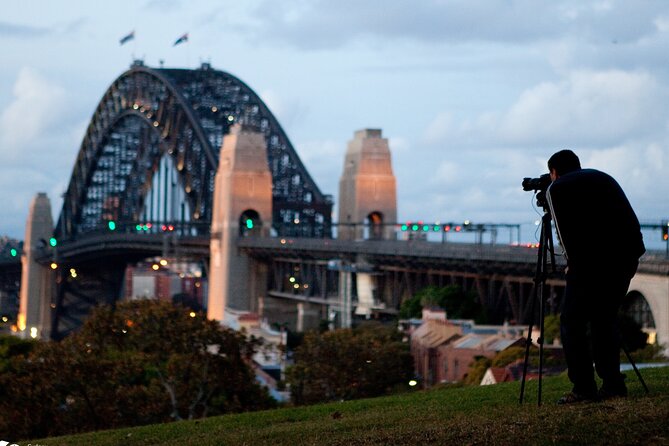
- On-location teaching: You learn composition and lighting while you’re actually looking at the harbour view, not just discussing it.
- All camera modes, not just one: You get clear guidance on how different shooting modes are used, then you shift into manual mode for real control.
- Manual capability matters: It’s designed for cameras that can fully operate in manual (including SLR and mirrorless).
- Small group size (10 max): More time for individual coaching and feedback.
- A beginner reset with depth: It starts at the basics of camera and lens kit, then builds toward pre-visualising your shots.
- Weather dependent: The schedule depends on good weather, so plan to be flexible.
Why the Harbour Foreshore is a perfect photo classroom
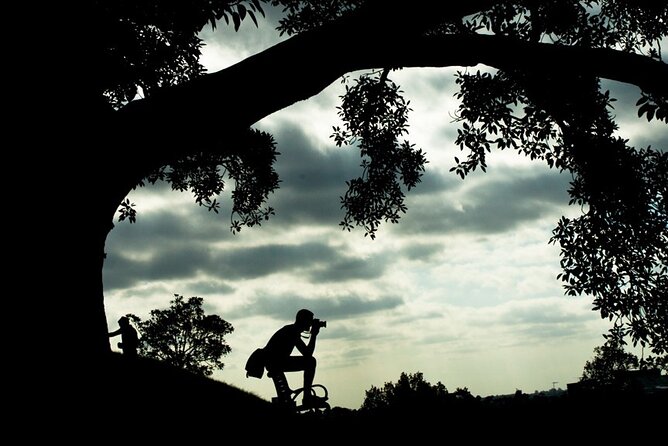
Sydney Harbour is basically a cheat sheet for photographers. You get repeating subjects (the Opera House, Bridge, Quay structures, waterfront lines) and you also get changing light as you move through the day. That mix is exactly what makes a skills workshop stick.
What I like here is that the teaching isn’t limited to one style. You’re working on composition techniques and building an understanding of lighting conditions, which is the part that usually trips people up. In a photo class, it’s easy to memorize settings. It’s harder to recognize why a shot looks flat, too dark, or slightly off, and then fix it on the spot. This format pushes you toward that cause-and-effect thinking.
It also helps that the scenery stays “real.” You’re not imagining a landscape. You’re standing in front of the scene, with people walking past, boats moving, shadows shifting, and clouds changing the brightness. That is where your camera settings and your visual planning have to work together.
Customs House start, getting there, and what to bring
You meet at Customs House, 31 Alfred St, Sydney NSW 2000, and you start at 12:00 pm. The workshop ends back at the same meeting point, so you’re not juggling transfers or long return routes.
Two practical notes from the tour details that matter for your day:
- It’s near public transportation, which makes the lunch time start more manageable.
- The activity calls for moderate physical fitness. You should expect walking as you move between harbour viewpoints and the Rocks area.
You’ll get a mobile ticket, and the group is small. Service animals are allowed, which is good to know if that affects your planning.
For your kit, the most important requirement is your camera. This workshop is suitable for any camera with full manual capability, including SLR and mirrorless. If you’re using a compact camera without full manual controls, it is not a fit.
My practical advice: bring the lens you normally use most, plus anything you rely on for wider shots or tighter framing. If your camera has a mode dial and manual exposure settings, you’re in the right place.
Other shoots with the harbour behind you:
- Sydney: Private Photoshoot outside the Opera House★ 4.6 · 40 reviews
- Sydney Photography Course in the Historic Rocks Area★ 5.0 · 35 reviews
- Private photo tour at Sydney’s most iconic locations★ 4.9 · 12 reviews
Opera House stop: framing a landmark without losing control
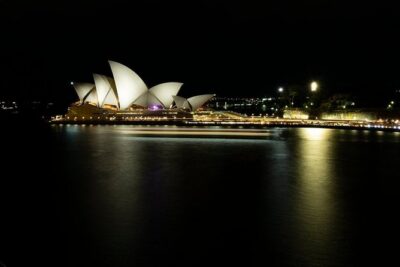
The first teaching ground is the Sydney Opera House area. It’s a smart starting point because it gives you strong shapes and lots of angles quickly. You can test composition right away: wide establishing frames, tighter detail shots, and viewpoints that emphasize leading lines and symmetry.
This workshop focuses on helping you understand what your shooting modes do and when to use them. In early moments, that means learning how your camera thinks about exposure, then learning how you can take over. If you’re used to fully automatic, this stop is where you start noticing that the camera is not deciding for you in a mystical way. It’s responding to settings like aperture, shutter speed, and ISO.
As you practice, keep one goal in mind: pre-visualise before you press the shutter. The class aims to build that habit, so you’re not shooting 100 frames hoping one is right. You’re choosing composition, then choosing settings that match the look you want.
A possible drawback at iconic sites like this is crowd movement. Even with a small group, you may have to wait for a clean shot or adjust your position when people pass through your frame. That’s not a reason to skip it. It’s part of learning how to work with real conditions.
Harbour Bridge and Circular Quay: using modes for real light
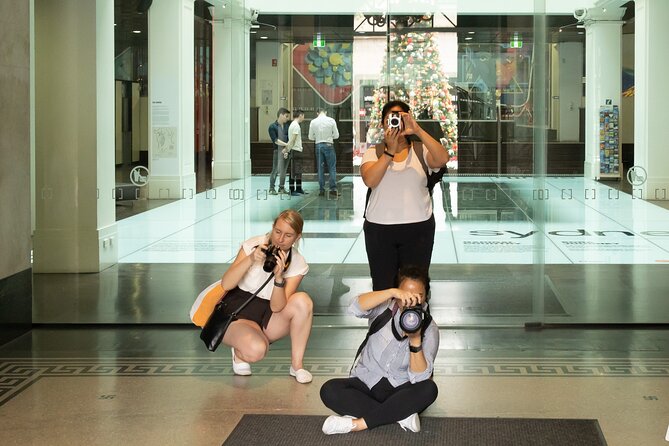
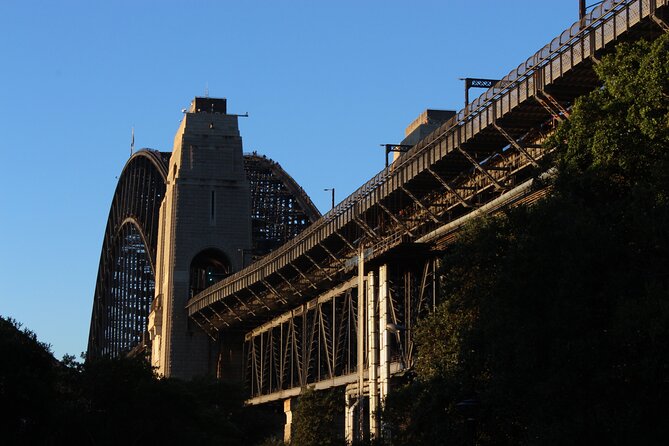
Next comes the Sydney Harbour Bridge area, then Circular Quay. Together, these stops give you a chance to practice a key lesson: the light changes what you need from your camera.
The workshop is built to cover working with various lighting conditions. In practice, that translates to learning how to adapt instead of copying one perfect setting. If the scene is brighter, your exposure choices shift. If shadows are cutting across the frame, your contrast and meter readings shift. You learn to see that relationship and respond.
You’ll also be introduced to the operation of your camera in manual mode. That doesn’t just mean turning the dial and hoping for the best. The coaching style here is aimed at giving you creative control, so you can choose how motion is captured, how much depth you get, and how the image holds up in tricky brightness.
Circular Quay is especially useful for this because it has both architectural backdrops and open views. That mix helps you practice composing across layers. You’re thinking about foreground interest, midground structure, and background identity, and you’re doing it while the light is shifting.
The Rocks Precinct: composition practice in a story-world
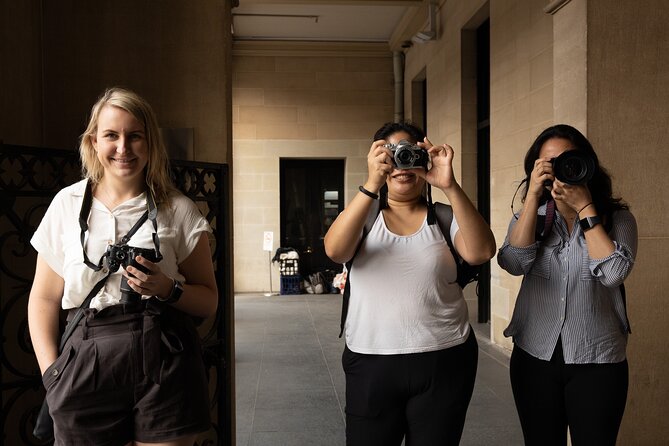
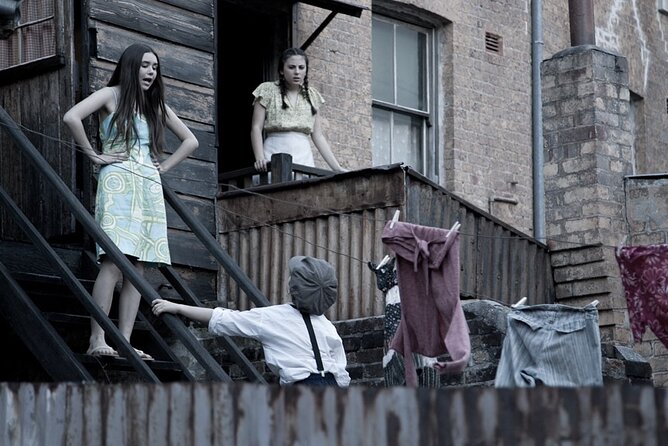
The Rocks Precinct is where the workshop can start to feel like it’s getting fun in a deeper way. After you’ve worked the large icons, you shift into more textured streetscapes and photo angles that are less obvious.
This area is designed as an introduction that blends classic Sydney views with quieter, more tucked-in possibilities. The goal is to help you stimulate your creative eye. Instead of only chasing the big landmark shot, you learn to look for composition opportunities: patterns, lines, doorways, stairways, and the way buildings sit next to the harbour.
This is also where pre-visualising becomes more than a theory. You’re more likely to build a shot by deciding what story you want. Is it about architecture? About leading lines pulling your eye back toward the water? About capturing light on stone? The workshop encourages that mental preview so you can plan instead of just react.
One more practical advantage: theory moves faster when you’re practicing in real space. The format is built to let you connect what you learned about modes and manual control to the actual act of shooting on the sidewalk and viewpoint.
A few more Sydney options worth weighing

From camera basics to confident manual control
If you’ve tried to learn photography before, you probably ran into one of two extremes. Either the class stays too basic and never gets to your settings. Or it gets technical too fast and you leave with terms, not results.
This workshop is pitched as a great start for beginners, and a strong re-introduction for people who want to regain confidence. It starts at the beginning: understanding your camera, lenses, and essential kit. Then it progresses into how your camera works in manual mode so you can shape the image intentionally.
Here’s what you should walk away able to do, based on the workshop focus:
- Know what different shooting modes are for, and how to apply them to essential techniques.
- Understand how lighting conditions affect your choices.
- Develop the ability to pre-visualise a photograph before you start shooting.
- Use manual mode for creative control, not just to prove you can.
Even if you think you already know your camera, this kind of reset is often valuable because it turns your settings into decisions. You stop thinking in terms of what button to press, and you start thinking in terms of what look you want, then selecting the settings that match.
Price and value: is $107.59 for 4 hours worth it?
At $107.59 per person for about 4 hours, the value comes from coaching plus on-location practice. This isn’t only a lecture, and it isn’t only sightseeing. You get instruction that aims to connect fundamentals with real scenes around Sydney Harbour and the Rocks.
A big part of the value is the small group size, max 10 travelers. When you’re learning camera settings, it helps to have your questions answered in the moment. Otherwise, you spend the session repeating the same mistake later, with no feedback loop.
You’re also paying for expertise from a professional photojournalist. The reviews you’ll likely find online consistently point to clear teaching and an instructor who explains things in a way that makes sense fast. One instructor named in feedback is Daniel Linnet, and another name connected to the workshop material is Glenn Lockitch. What stays consistent is the teaching approach: clear and easy to follow, plus lots of willingness to share knowledge.
If your goal is to go from auto mode dependency to intentional shooting, this price can make sense, especially because you’re getting a focused half day instead of trying to learn all at once through trial and error.
Who should book, and who might want a different option
This workshop is a good fit if:
- You’re a beginner, or you’ve fallen out of practice and want a clean reset.
- You own a camera that supports full manual capability, including SLR and mirrorless.
- You want to learn how to shoot in all modes, then move into manual for control.
- You like learning by doing, while walking between viewpoints.
It may not be a fit if:
- You use a compact camera without full manual capability. The workshop explicitly notes it is not suitable for those cases.
- You want a strictly indoor lesson, because the class is built around walking and on-location shooting.
- You’re hard set on fixed weather plans. The experience requires good weather, and if it’s cancelled for poor conditions you’ll be offered a different date or a full refund.
Also consider timing. A 12:00 pm start means you’re shooting in daylight conditions that can vary depending on cloud cover and what the harbour is doing at that moment. That variability is useful for learning, but it’s still something to plan around.
Make the most of your 4 hours: practical tips
You’ll get the best results if you show up ready to shoot, not ready to figure out how your gear works for the first time. Before you arrive, do a quick check:
- Confirm your camera has full manual control.
- Know how to switch between your key modes and access manual settings.
- Bring extra battery and card space, since you’ll likely take more photos than you think while testing ideas.
During the workshop, move with purpose. If the instructor is explaining a setting or composition idea, don’t treat it like trivia. Use it immediately. Try one approach, then change one variable at a time. That is the fastest way to learn.
Finally, be patient with the creative part. Pre-visualising sounds simple, but it’s a skill. It improves the more you practice choosing a shot before pressing the shutter.
Should you book this Sydney Harbour photography essentials workshop?
I recommend booking it if you want a structured path from basic camera understanding to manual control, with real coaching and real scenes around Sydney Harbour and the Rocks. The combination of iconic landmarks and practical, on-street learning is exactly how you make your photography skills feel less mysterious.
If you have a compact camera without full manual capability, skip this and look for a program built for your gear. If the weather looks uncertain, be flexible, because good conditions matter here.
For the right camera and the right mindset, this is a solid value half day. You’ll leave with more than a stack of photos. You’ll leave with a way to think about settings, light, and composition that you can use again the next time you walk out the door.
FAQ
What is the duration of the Photography Essentials Workshop in Sydney Harbour Foreshore?
It runs for about 4 hours.
Where do I start and where does the workshop end?
You start at Customs House, 31 Alfred St, Sydney NSW 2000, and the activity ends back at the meeting point.
What is the group size limit?
The workshop has a maximum of 10 travelers.
What cameras is the workshop suitable for?
It is suitable for any camera with full manual capability, including SLR and mirrorless cameras.
Is this workshop suitable for compact cameras?
No, it is not suitable for compact cameras that do not have full manual capability.
What time does the workshop start?
The start time is 12:00 pm.
What if the weather is poor?
The experience requires good weather. If it is cancelled due to poor weather, you will be offered a different date or a full refund.
Latest Sydney additions
- Sydney: Surry Hills Private Food Tour with +8 Local Tastings
★ 5.0 · 1 review - Sydney: Hunter Valley Wine Tour – Choc, Dumplings & Oysters
★ 5.0 · 1 review - Private Transfer FROM Sydney Downtown to Sydney Airport 1-2 pax
★ 5.0 · 1 review - Sydney Harbour Melbourne Cup Cruise
★ 5.0 · 1 review - Sydney: Brewery, Winery, and Distillery Tasting Tour
★ 5.0 · 1 review - Sydney: Watsons Bay Walking Tour
★ 5.0 · 1 review - Sydney: City Hike with Opera Bar Lunch
★ 5.0 · 1 review - Overnight Harbour Cruise Experience
★ 4.0 · 1 review
Sydney Photo Shoots, compared.
Private photo tour at Sydney’s most iconic locations
Read our review →
Private Sydney Harbour Sunset Photo Tour & Cruise
Read our review →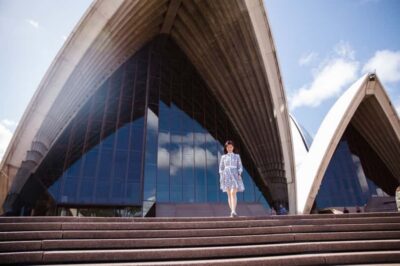
Private Pro Photography- Sydney -price per group of 4
Read our review →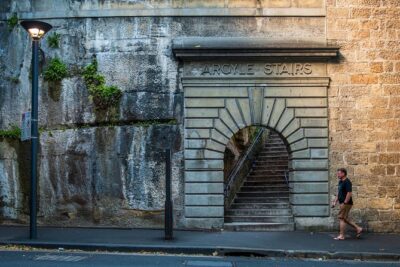
Sydney Photography Masterclass – Private Photography Lesson
Read our review →More of this kind of Sydney day